Any player chosen 199th in the NFL draft clearly hasn’t dazzled the scouts. But in 2000, Mr. 199 was a nobody named Tom Brady.
Yes, that Tom Brady, the quarterback who went on to lead his teams to seven Super Bowl championships. Somehow, eagle-eyed pro scouts gave him the once-over and missed his massive talents.
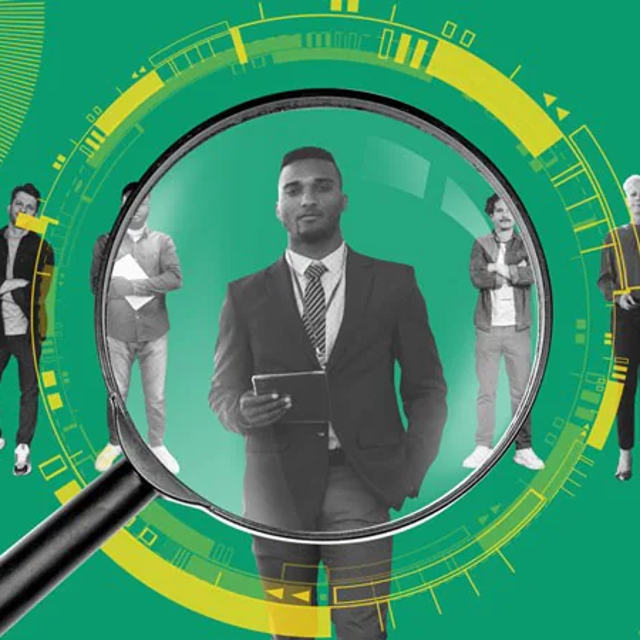
When it comes to identifying high-potential (or HiPo) employees—workers who have the potential, ability, and aspiration to move up two levels within the organization and take on leadership roles—companies can’t afford to make the same mistake. According to Gartner research, HiPo employees bring 91% more value to the organization than other workers, even others who are high performers. It's a critical distinction: Not all high-performing employees are high potential. In fact, only 15% of high performers—one in six—are HiPo employees, according to CEB Global Research.
To help with the sorting process, many companies are turning to artificial intelligence (AI). Leveraging data from aptitude, attitude and behavioral assessments developed by organizational psychologist, AI can determine which employees have true leadership potential, allowing them to devote scarce resources for leadership development more effectively. Better yet, AI tools can help coach HiPo employees to develop the skills needed to fulfill that potential.
Determining which employees have high potential has long been an inexact science, based on a manager’s subjective assessment or “gut feeling.” Worse, unconscious bias can cloud managers’ judgment, hindering career advancement for women and minorities, according to Frontiers in Psychology.
“You can train AI to ignore a person’s race and gender, but you can’t train the human brain to ignore these things,” says Dr. Tomas Chamorro-Premuzic, professor of business psychology at University College London and author of I, Human: AI, Automation and the Quest to Reclaim What Makes Us Unique. “The potential for AI to be used for fairer, more equitable, diverse, and inclusive identification of HiPos is clear.”
Talent analytics companies like SHL, Plum, TestGorilla, and ghSMART use AI to strip implicit bias from the high-potential identification process. Instead, they rely on data gleaned from anonymized assessment tools developed by organizational and behavioral psychologists.
At SHL, says Sarah McLellan, director of European professional services, AI infuses every aspect of the assessment process. It’s used to train their datasets from studies of 431,000 employees from various job roles, industries, and company sizes. It is also what builds SHL’s predictive machine-learning algorithms, and even analyzes the test process.
“We’re not just looking at how many questions they’ve got right and wrong. We’re also analyzing the approach that they’ve taken to arrive at their answer,” McLellan explains.
The result: a predictive rating of employees’ potential in three areas: cognitive ability, career aspiration, and organizational engagement. Will they have the aptitude to manage a team? Will they bring a genuine desire to ascend to a managerial or leadership role to their advancement? And will they be committed to the organization over the long term?
McLellan notes that in SHL’s assessment of 21 out of 27 key factors related to whether an employee has the potential to fill a specific leadership role, female employees tend to outperform their male counterparts, delivering on the promise of AI’s data-driven outcomes to level the career-advancement playing field for women.
But both McLellan and Chamorro-Premuzic caution that, given the proven potential for implicit bias in algorithmic design, you need a human in the loop to monitor output, at least for now. That could mean a manager factoring in their personal experience of the employee, or a data scientist surveying output to ensure that they are diverse and equitable.
“It’s still the case that human and tech together will produce something that is more accurate and inclusive than one without the other,” says Chamorro-Premuzic.
Once high-potential employees have been identified, new AI tools are emerging to help them develop the skills to reach their leadership potential, even those that require a human touch.
Harvard Business School professor Anthony Mayo studied more than 3,000 participants in the university’s flagship High Potentials Leadership Program (HPLP) from 2003 through 2021. He found that soft skills such as emotional intelligence and communication consistently ranked among the top three areas in which HiPos needed training.
“These skills are often a challenge,” explains Mayo, “because what got you to the place where you’re tapped to move into a leadership role, like being results-driven and self-reliant, can be an impediment to further growth. It takes a mindset shift.”
Traditionally, soft-skills leadership coaching has been done through one-on-one mentorship or week-long training retreats, but, as Mayo notes, “you can’t do that at cost and scale.”
So, can emerging technology scale up and democratize mentorship? A recent study by PloS One shows that an AI chatbot was just as effective as a human coach in developing social skills over a 10-month cohort. Other research finds that trainees can establish “positive working alliances” with AI similar to those they form with human coaches.
Advances in natural language processing, including generative AI programs like ChatGPT, is accelerating chatbot coaching capabilities, says Chamorro-Premuzic, who notes that “AI can provide us with feedback on our behavior in the same way that wearables tell us whether we are moving enough or sitting for too long in our chair.”
Case in point: Before firing off an email or text, a HiPo training as a manager could ask their AI coach to review it for emotional tone and suggest more empathetic language. Or they may ask an AI coach to monitor a virtual meeting to assess whether people on the call reacted positively or not, who they addressed or ignored, or who they may have cut off mid-sentence.
But, Chamorro-Premuzic says, despite the emerging cottage industry of AI leadership coaching tools, AI “is not there yet” when it comes to effectively cultivating emotional intelligence and genuine empathy.
For high-potential employees, the potential of AI itself has not yet been fully tapped.
Find out how ServiceNow can help you put AI to work for HR.